

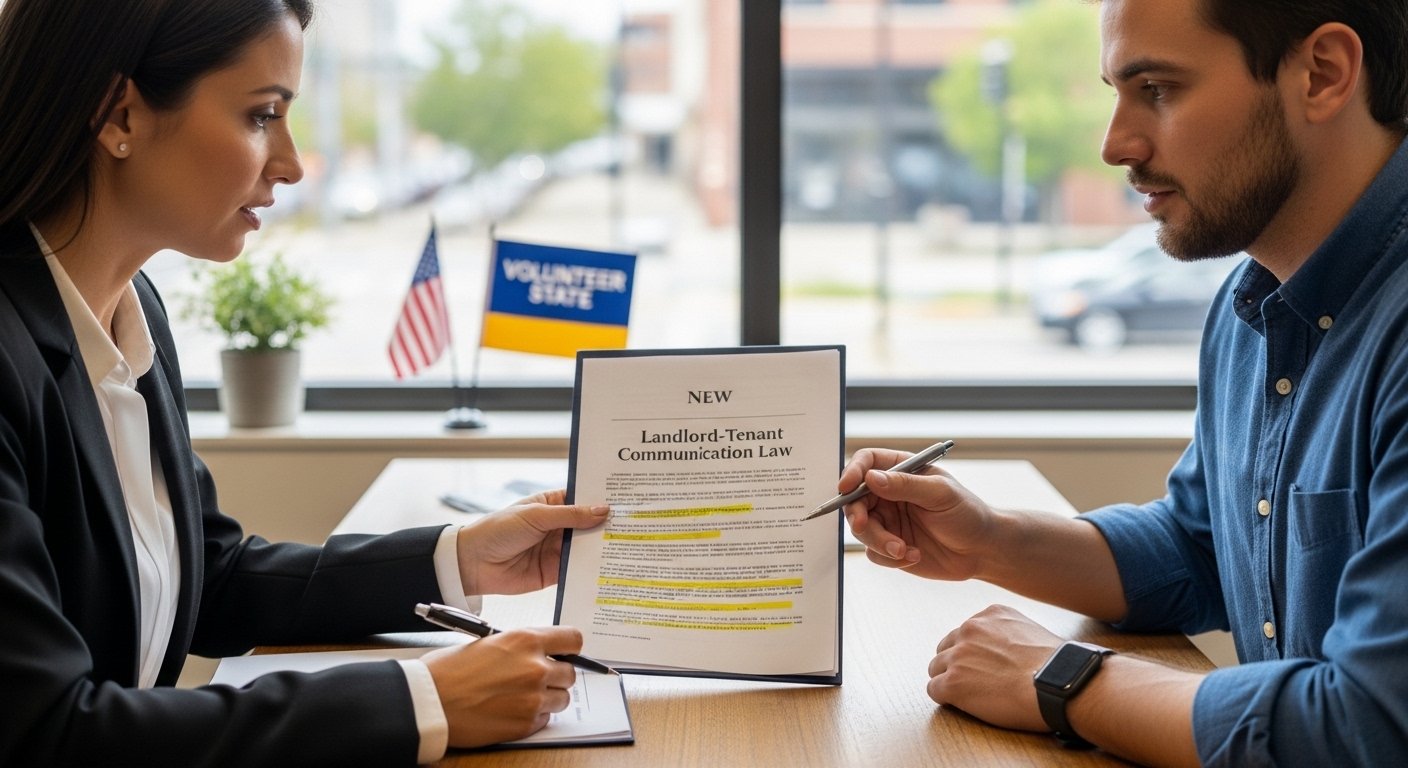
Effective January 1, 2025, Tennessee House Bill 1814; enacted as Public Chapter No. 907—introduced expanded disclosure requirements designed to improve transparency and communication between landlords and tenants. Officially amending Tennessee Code Annotated (TCA) § 66-28-302, the legislation is commonly referred to in legal and housing circles as the Landlord Transparency Act. It strengthens the existing framework under the Uniform Residential Landlord and Tenant Act (URLTA) by mandating clearer, more actionable contact information for maintenance, emergencies, notices, and service of process.
This update addresses longstanding practical challenges in landlord-tenant relationships, particularly in counties where absentee ownership or third-party management companies have sometimes left tenants without straightforward ways to report urgent issues or serve legal documents. The Tennessee General Assembly passed the measure with strong bipartisan support in April 2024 (House: 83-3; Senate: 27-0), and it was signed by the Governor on May 13, 2024.
Understanding the New Tennessee Landlord Tenant Communication Law in Context
Prior to January 1, 2025, TCA § 66-28-302 already required landlords (or their authorized agents) to disclose in writing, at or before the start of a tenancy, the name and address of the managing agent and the owner (or authorized representative) for service of process and receipt of notices and demands. Failure to comply made the non-disclosing party an agent for those purposes.
The new law builds directly on this foundation. It retains the core identification requirements but adds mandatory contact details for day-to-day operations; specifically maintenance services or an online communication portal; while introducing tenant remedies and a duty to keep information current. These changes reflect common real-world frictions: delayed repair requests, difficulty locating responsible parties during code enforcement actions, and complications in eviction or habitability proceedings.
The statute applies only to rental agreements entered into, amended, or renewed on or after the effective date. Existing leases are unaffected unless renewed or modified after January 1, 2025.
Scope of Application: Which Properties and Landlords Are Covered?
The New Tennessee Landlord Tenant Communication Law operates within the URLTA, codified at TCA Title 66, Chapter 28. This chapter applies in counties with a population of more than 75,000 according to the most recent federal census. As of 2025–2026, this includes major metropolitan areas such as Shelby County (Memphis), Davidson County (Nashville), Knox County (Knoxville), Hamilton County (Chattanooga), Rutherford County, Williamson County, and others. Smaller, rural counties remain outside the URLTA’s scope unless they have opted in through local procedures.
The law covers both individual landlords and property management companies, including third-party managers. It explicitly contemplates corporate or out-of-state owners by requiring identification of a Tennessee-based or authorized agent.
Mandatory Disclosures: What Landlords Must Provide in Writing
Under the amended TCA § 66-28-302(a), the landlord or authorized representative must furnish the following information in writing at or before the commencement of the tenancy:
- Name and address of:
- The agent authorized to manage the premises (expressly including third-party management companies); and
- An owner of the premises or a person or agent authorized to act on the owner’s behalf for acceptance of service of process and receipt of notices and demands.
- Either:
- A telephone number or electronic mail address for maintenance services; or
- An online portal system designed for landlord-tenant communication.
The statute does not mandate 24-hour emergency numbers or separate office/maintenance email addresses in the final enacted version (those details appeared in the introduced bill but were removed by House Amendment #1). However, best-practice compliance often includes emergency contacts to reduce disputes.
Disclosures may appear in the lease itself, a separate addendum, or a standalone written notice. Landlords must keep the information current and accurate; the obligation extends to successor owners or managers.
Tenant Rights and Remedies Under the New Law
If the required information is omitted from the lease or other writing, tenants now have a clear statutory pathway:
- The tenant may deliver a written request for the missing information.
- The landlord has 10 days from receipt of the request to provide it.
- If the landlord fails to comply, the tenant may file a cause of action in court seeking an order compelling disclosure.
- Upon a finding of noncompliance, the court must award the tenant reasonable costs and attorney’s fees.
Additionally, any person who fails to comply with the disclosure requirements is deemed an agent of the landlord for purposes of service of process and receipt of notices and demands (retaining and expanding the prior rule). This provision prevents landlords from evading legal responsibility through poor record-keeping or intentional nondisclosure.
In practice, these remedies give tenants leverage in habitability disputes, repair requests, or code enforcement matters where prompt communication is essential. Courts handling general sessions or circuit civil cases now have explicit statutory authority to address these compliance failures efficiently.
Practical Impact on Day-to-Day Landlord-Tenant Relations
The New Tennessee Landlord Tenant Communication Law directly addresses scenarios that frequently lead to litigation or regulatory complaints:
- Maintenance and repairs: Tenants can now contact the designated maintenance line or portal immediately, creating a clearer paper trail for “reasonable time” repair obligations under URLTA.
- Emergencies and code enforcement: Local building officials and health departments can more readily identify responsible parties, improving compliance with housing codes.
- Legal notices and service of process: Eviction filings, notices to vacate, or demands for unpaid rent become less prone to procedural delays caused by defective service.
- Successor liability: When properties change hands mid-tenancy, new owners or managers inherit the disclosure duty, protecting tenants from sudden communication blackouts.
Property managers and institutional landlords have responded by updating lease templates, creating dedicated tenant portals, and training staff on the 10-day response window. Individual landlords, especially those with limited portfolios, must ensure they maintain physical mailing addresses (P.O. boxes alone are generally insufficient for official notices) and working contact methods.
Compliance Checklist for Landlords
To avoid court-ordered disclosures and fee awards, landlords should:
- Include all required information in every new, amended, or renewed lease on or after January 1, 2025.
- Verify that third-party management companies are properly identified.
- Choose either a dedicated maintenance phone/email or a functional tenant portal.
- Document delivery of disclosures (e.g., signed acknowledgment or certified mail).
- Update information promptly and notify existing tenants of material changes.
- Retain records for the duration of the tenancy plus any applicable statute-of-limitations period.
Failure to comply does not automatically void a lease or create new damages beyond the statutory attorney-fee remedy, but it can complicate eviction proceedings, security-deposit disputes, and code-violation defenses in real-world courtroom practice.
Why the Law Matters: Broader Legal and Policy Context
The Tennessee General Assembly acted in response to tenant advocacy and local government concerns about accountability in rental housing. Similar transparency measures exist in other states, reflecting a national trend toward modernizing landlord-tenant statutes for an era of corporate ownership, digital communication, and online portals. By requiring either traditional contact methods or approved digital platforms, the statute balances tenant access with operational flexibility for landlords.
No fiscal impact note indicated significant state costs, and the bill passed with minimal opposition, signaling broad recognition that clear communication reduces unnecessary litigation.
Key Takeaways
- The New Tennessee Landlord Tenant Communication Law is now fully in effect for applicable leases.
- It expands required written disclosures beyond basic names and addresses to include maintenance contact or an online portal.
- Tenants gain an expedited judicial remedy; including attorney fees; if landlords ignore written requests.
- Landlords must treat disclosures as an ongoing obligation that survives property transfers.
Disclaimer
This article is for informational purposes only and does not constitute legal advice. Laws can be subject to judicial interpretation, and specific facts may alter outcomes. Readers should consult a licensed Tennessee attorney or review the official text of Public Chapter No. 907 and TCA § 66-28-302 for application to their individual circumstances. Official sources are available through the Tennessee General Assembly website and the Tennessee Secretary of State’s publications.