

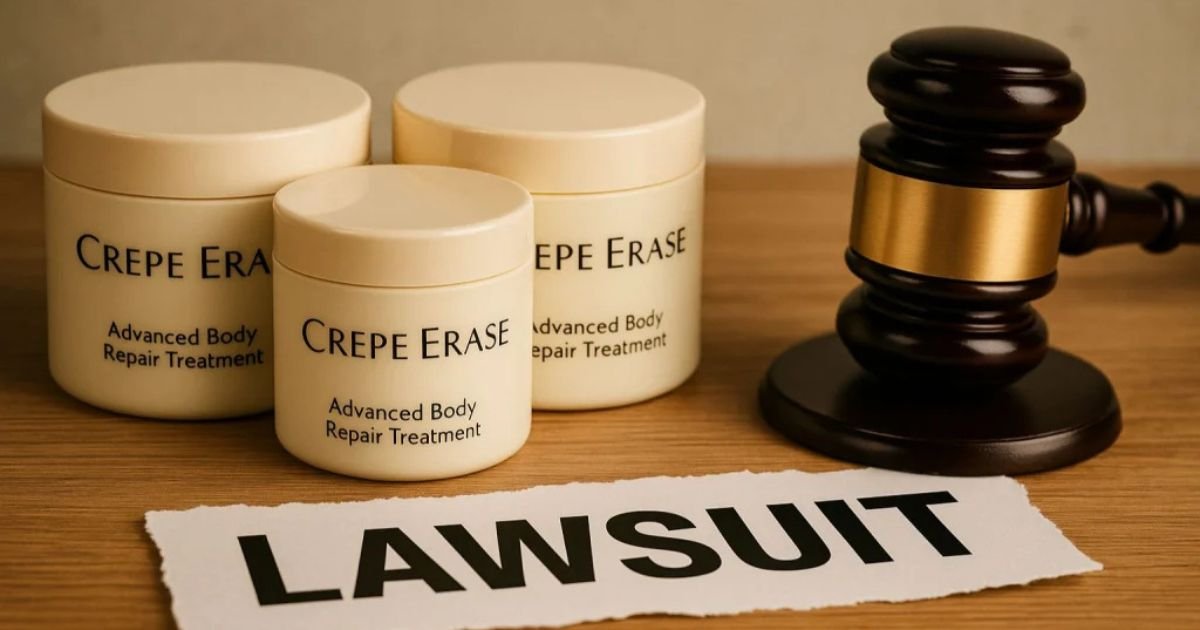
The crepe erase lawsuit has drawn attention from consumers who purchased skincare products marketed to address crepey skin, a common concern involving thin, wrinkled, or loose skin often appearing on the arms, neck, or legs. Crepe Erase, sold primarily through direct-to-consumer channels by The Body Firm, LLC, promises visible improvements in skin texture and firmness through its body creams and related kits.
While no large-scale, court-certified class action settlement has been approved specifically resolving claims about product efficacy or billing practices for Crepe Erase as of April 2026, multiple sources document widespread consumer complaints and a pending class action lawsuit against the company focused on pricing representations. This article examines the key allegations, relevant legal frameworks, and available consumer options in a factual context drawn from court records, regulatory principles, and public complaint data.
Background on Crepe Erase and the Company
Crepe Erase products are positioned as anti-aging skincare solutions, often promoted via infomercials, websites, and targeted advertising that highlight clinical-sounding results and before-and-after imagery. The Body Firm, LLC, operates as the primary marketer and seller, with historical ties noted in some filings to Guthy-Renker LLC, a direct-response marketing firm known for similar product lines.
Purchases frequently occur online or through promotional offers that include a low initial price for a trial or starter kit, followed by additional shipments. The company maintains a 60-day money-back guarantee, which consumers may invoke by returning products (including empty containers in some cases) for a refund, subject to terms.
Core Allegations Fueling the Crepe Erase Lawsuit Discussions
Consumer complaints center on two main areas: advertising claims about product performance and billing practices.
First, many purchasers report that the products did not deliver the dramatic improvements in crepey skin texture advertised. Critics point to marketing materials that use terms such as “clinically shown” or feature celebrity endorsements and visual transformations, arguing these create expectations unsupported by substantial scientific evidence in the view of some buyers. The National Advertising Review Board (NARB), an industry self-regulatory body, reviewed certain Crepe Erase claims in 2019 and upheld aspects of the advertising after an initial challenge by the National Advertising Division.
Second, a significant volume of complaints involves subscription or auto-renewal billing. Consumers allege they believed they were purchasing a one-time item or trial offer but later received recurring charges (often $40 to $80 per month) without clear, upfront consent or easy cancellation. The Better Business Bureau (BBB) has logged hundreds of complaints against Crepe Erase in recent years, with many involving unauthorized charges, refund delays, or difficulties reaching customer service.
These issues fall under the broader scrutiny of “negative option” marketing, where consumers must actively cancel to avoid ongoing charges. The Federal Trade Commission (FTC) has pursued enforcement actions against other skin cream marketers for similar undisclosed recurring fees and inadequate disclosures, resulting in bans and monetary judgments in some cases.
Recent Legal Development: Roberts v. The Body Firm, LLC
A class action complaint filed on November 20, 2025, in the U.S. District Court for the Central District of California (Case No. 2:25-cv-11126) represents the most direct pending litigation tied to The Body Firm’s marketing practices. In Roberts v. The Body Firm, LLC, plaintiff Teresa Roberts alleges the company used deceptive pricing tactics on its Age-Defying Body & Face Kit and other cosmetic products, including Crepe Erase offerings.
The lawsuit claims the company displayed strike-through “original” prices alongside discounted rates (such as 25 percent off) and countdown timers suggesting limited-time deals, even though the higher prices were never actually charged. These practices are asserted to violate California’s False Advertising Law (FAL), Consumers Legal Remedies Act (CLRA), and Unfair Competition Law (UCL). The case remains in its early stages, with no class certification or settlement approved as of the latest public information.
This filing does not directly address product efficacy or auto-renewal claims but highlights ongoing scrutiny of The Body Firm’s sales tactics. Earlier cases, such as a 2019 accessibility lawsuit against the company’s website, were resolved without reaching the merits of product performance.
Legal Framework Governing These Claims
Class action lawsuits and individual complaints in this space typically rely on established consumer protection statutes. Under the FTC Act, advertisers must possess competent and reliable scientific evidence to support performance claims before dissemination. The Restore Online Shoppers’ Confidence Act (ROSCA) and state auto-renewal laws require clear disclosures and affirmative consumer consent for recurring charges.
In California, where many direct-to-consumer skincare cases are filed, the UCL prohibits unlawful, unfair, or fraudulent business acts, while the CLRA and FAL target misleading representations. Courts evaluate whether reasonable consumers would be deceived by the challenged practices.
If a class is certified under Federal Rule of Civil Procedure 23, it would allow similarly situated purchasers to proceed collectively, potentially leading to a settlement that provides refunds, credits, or injunctive relief (such as revised advertising or billing disclosures). Settlements in consumer product cases often occur without admission of wrongdoing by the defendant and include a claims process administered by a third-party notice provider.
Are Consumers Owed a Refund?
Eligibility for any refund depends on specific circumstances and the resolution of any litigation or individual dispute.
- Company Guarantee: The Body Firm offers a 60-day money-back policy. Consumers who purchased directly may contact customer service to request a refund, even after using the product in accordance with stated terms.
- Credit Card or Payment Disputes: Many consumers have successfully disputed recurring charges through their banks or credit card issuers under unauthorized transaction rules. Documentation of purchase details, cancellation attempts, and communications strengthens such claims.
- Pending Class Action: Should Roberts v. The Body Firm, LLC reach a settlement or judgment, notice would be sent to class members who purchased qualifying products during the relevant period. Claims would be submitted through an official administrator’s website or form; no action is required until a formal notice is issued.
- Regulatory Complaints: Filing with the FTC, state attorneys general, or the BBB creates a record that may support individual recovery or contribute to broader enforcement.
No court-approved Crepe Erase-specific settlement fund is currently accepting claims. Past settlements by affiliated entities for unrelated products (such as Proactiv auto-renewal cases) have provided refunds in the past, but those are closed.
Practical Steps for Affected Consumers
Consumers who believe they were impacted by Crepe Erase marketing or billing practices should:
- Review bank or credit card statements for all charges.
- Document all communications with the company, including order confirmations and cancellation requests.
- Retain packaging, receipts, and product samples if pursuing a refund or complaint.
- Monitor official court dockets or reputable class action tracking sites for updates on Roberts v. The Body Firm, LLC or any future filings.
- Contact their state attorney general’s consumer protection division or the FTC for guidance on reporting deceptive practices.
Lawsuits of this nature can take months or years to resolve. Early-stage cases like the 2025 California filing may result in settlement negotiations once discovery proceeds.
Broader Context and Consumer Protection Trends
The crepe erase lawsuit discussions reflect wider regulatory focus on the direct-to-consumer skincare and anti-aging industry. The FTC has emphasized enforcement against “junk fees,” hidden subscriptions, and unsubstantiated health or beauty claims. Self-regulatory bodies such as the NARB provide an additional layer of oversight, though their decisions are non-binding.
These mechanisms aim to balance commercial speech protections under the First Amendment with the need for truthful marketplace information. Courts require advertisers to substantiate claims, while consumers retain rights to seek redress when practices fall short of legal standards.
Important Disclaimer
This article provides general information based on publicly available court filings, regulatory materials, and complaint data as of April 2026. It does not constitute legal advice and is not a substitute for consultation with a qualified attorney. Outcomes in any lawsuit depend on specific facts, jurisdiction, and judicial determinations. Consumers should verify current case status through official court records and seek personalized guidance regarding their individual circumstances.
For the most accurate updates on the crepe erase lawsuit or related matters, consult primary sources such as federal court dockets or the FTC website.
You may also like: The Strong Arm Lawyer Colorado | Franklin D. Azar & Associates